 I don’t know what is was like to be an author 40 or more years ago when reviews came out almost entirely in print or broadcast media. I assume that such reviews were limited to a handful of cultural gatekeepers whose reputations were weighty enough to make a difference to a book’s reception by the public and to its overall success. Generally, average readers’ views were passed by word of mouth or perhaps by letters to editors of periodicals that covered the arts. That is likely an incomplete description, but I think my broad outline of book reviewing before the dawn of the internet is for the most part accurate. Gatekeepers wielded singular power and books might live and die by their published views.
To some extent, those gatekeepers still have a significant voice when it comes to a book’s fate. However, what has changed in the last few decades is the democratization of criticism that has arisen by virtue of the internet. Now, virtually anyone can give any rating they like to a book – good, bad, or somewhere in between – and thus influence that book’s reception. (It is not uncommon, for instance, for people to search for books using a ratings level as a search criteria.) Such ratings need not be accompanied by any explanation for them, nor are their authors’ bona fides disclosed. If an author’s work happens to piss off someone or some group, those who have taken offense can wreak instant revenge online regardless of whether they have read the book. Likewise, if a book is hailed by an “influencer” as worth a read, others seeking favor and perhaps a slice of fame might jump on the bandwagon to demonstrate that their own cultural acuity is in line with said influencer. Both scenarios are simple facts in the information age we inhabit, and anyone thinking about releasing a book for public consumption needs to understand that contemporary dynamic. So what is a writer to do?
It’s simple: ignore the ratings, read the reviews. The number of stars a rater gives a work, while it may be helpful to a potential reader, tells an author nothing without more. The “more” is an accompanying review. If the review goes beyond a blurb, if it surpasses a simple attack or a single positive phrase and casts a thoughtful and critical eye on your work, read it slowly and honestly. Turn it over in your mind and ask if it fairly judges your work. If so, while there is nothing to be done about the book the review critiques (face it, you’re not going to rewrite it), it may be of some assistance, either as affirmation or as constructive advice, as you contemplate your next work.
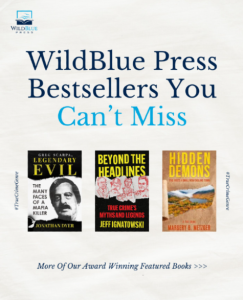
It’s a big world out there, and placing your book on a public platform for nearly all the world to see requires a thick skin and an objective brain. Honestly, if you’re missing one or the other, you expose your work at your peril! All of that being said, regardless of ratings and reviews it’s nice to see my book Greg Scarpa, Legendary Evil, associated with the word “Bestsellers” as my publisher WildBlue Press has posted (see image above)!